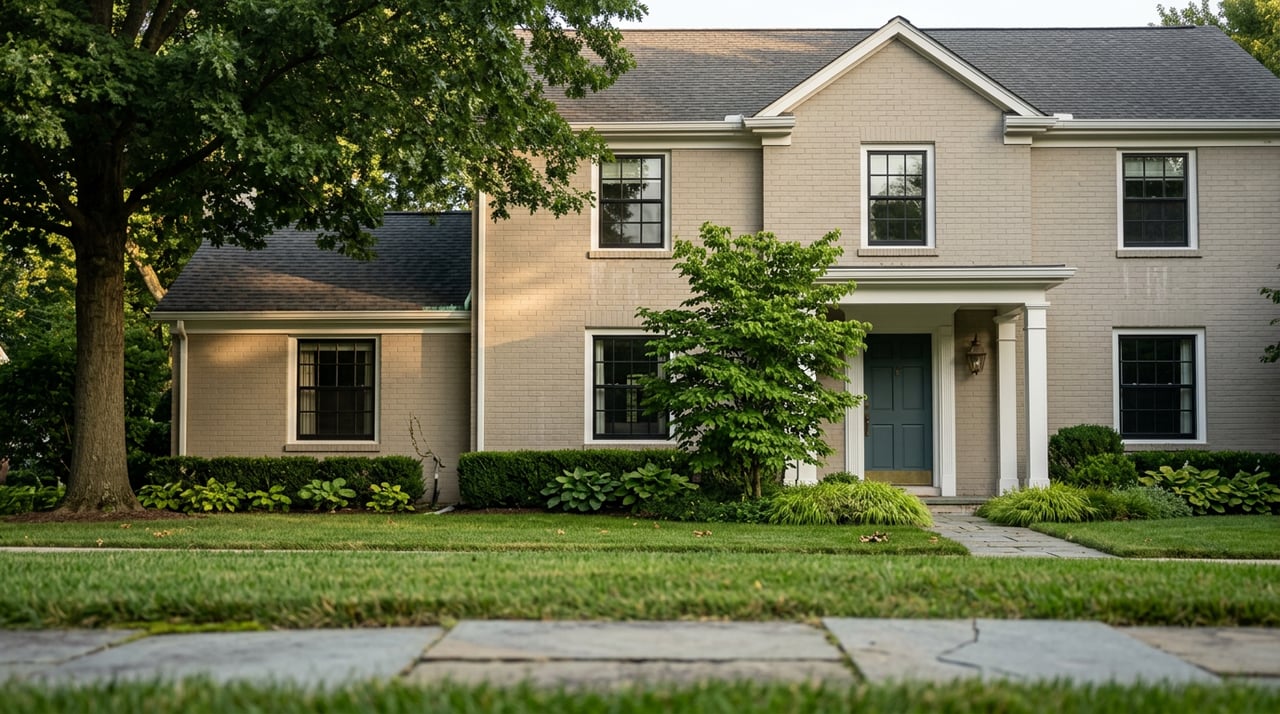
Haverford Never Built a Downtown. It Built Something Else Instead.
Ask someone who lives in Ardmore what their town is known for and they will mention the Music Hall or Suburban Square before you finish the question. Ask someone in Bryn Mawr and you get the Film Institute, or the galleries along the avenue. Ask a Haverford resident the same question and you get a pause. Not because nothing is happening. Because the answer does not live inside Haverford's own borders, and most residents have made peace with that trade a long time ago.
Haverford sits between two towns with real commercial cores, has its own SEPTA Regional Rail stop, and is built around a campus grounds design that a Notre Dame historian has called the oldest planned college grounds in the country. By the usual math, it should have a Main Street. It does not. What it has instead is 216 free acres that function as a commons, a two-block cluster that covers the basics, and an understanding among people who live there that the rest of the week happens a few minutes down Lancaster Avenue.
Haverford's residential character shows up in how thin the commercial strip actually is. Inside the neighborhood's own boundaries, there are really only two places to sit down and eat: Green Engine Coffee Co. on Haverford Station Road and the White Dog Cafe outpost inside Haverford Square. That is the entire in-borders dining scene for a community of this size on the Main Line.
Longtime residents also describe an informal split running along Lancaster Avenue itself, with a bit more polish on one side of the road than the other, the kind of texture that shows up in older Main Line towns where development happened block by block rather than by master plan. The effect is a neighborhood that reads as quietly residential rather than as a destination, which is exactly how most people who live there prefer it.
The reason Haverford can get away with almost no commercial center is that it has something most towns its size do not: a 216-acre arboretum that doubles as the entire Haverford College campus, open to the public every day of the year at no charge. It is not a courtesy extended to neighbors. It has functioned as public grounds since Quakers founded the college in 1833 and hired English gardener William Carvill to lay out the original grounds plan the following year.
What is inside those 216 acres is more specific than "campus with trees." A few things worth knowing before you go:
The arboretum also runs seasonal public programming rather than just standing open and hoping people wander in. Past fall calendars have included a guided walk on the season's fruiting trees led by a staff horticulturist, and a foraging walk with the founder of the Philadelphia Mycology Club teaching basic mushroom identification. None of it costs anything beyond the drive or the walk over.
Most Main Line towns pay for their public gathering space with tax dollars or a merchants' association. Haverford's shows up on the property records as a college.
Haverford Square sits on Lancaster Avenue directly across from the college, easy to spot by the cupola that sits above the storefronts. It is a small cluster by design: Stupp Luxury Fashion, PHD Jewelers, and Merritt Gallery share the retail space with the White Dog Cafe, and the square is also home to a small, old-school post office, the kind of detail that gives the cluster a neighborhood feel rather than a strip-mall one. Parking is free and the whole footprint is walkable in about ten minutes, which matters more than it sounds like it should when the alternative in most Main Line towns is circling for a spot on a real Main Street.
Down at Green Engine Coffee Co., the hours matter as much as the menu. The shop opens by 8 a.m. every day of the week and closes by mid-afternoon, early enough to catch a coffee before a train on a weekday and steady enough to be a Saturday routine too. The menu leans into pastries, paninis, and sandwiches alongside the coffee, the kind of list that works whether you have five minutes or fifty. It functions less like a destination cafe and more like the actual front porch of the neighborhood, the place where a five-minute stop turns into forty-five because someone you know is at the next table.
That is the full list. Two food and drink stops, one small retail cluster, and 216 acres of grounds. For a lot of towns that would read as thin. For Haverford it reads as the whole point.
The honest version of a Haverford week accounts for the fact that most of the evening activity happens somewhere else, and residents treat that as a feature rather than a gap. Ardmore, a few minutes east, carries the nightlife load with the Ardmore Music Hall booking regular live shows and the daily Ardmore Farmers Market running out of Suburban Square, giving residents a reason to make the short drive on an ordinary weekday and not just for a special occasion. Bryn Mawr, just as close, covers the arts side of the ledger through the Bryn Mawr Film Institute's independent and classic film programming and the Main Line Art Center's gallery shows and classes.
None of that requires treating Haverford as incomplete. It requires treating the three towns as one functional unit, which is closer to how residents actually use the map than any single-town guide would suggest. The arboretum and the Square handle daytime and weekday life inside Haverford's own lines. Ardmore and Bryn Mawr pick up everything after dark or anything that needs a stage, a screen, or a market stall.
Laid out that way, the week has no gaps in it. It just runs across three sets of town lines instead of staying inside one.
The absence of a Main Street in Haverford is not an oversight. It is the direct result of a place built around a college grounds plan from 1833 rather than a commercial district, and the arrangement has held for close to two centuries because the trade works. Residents get free daily access to 216 acres of maintained grounds and seasonal programming that most towns would have to fund through a parks budget, and in exchange they accept that dinner reservations, live music, and film nights happen a short drive away rather than on foot.
Understanding a neighborhood at this level, not just what it costs but how residents actually structure a week inside it, is the kind of detail that shapes real decisions about where to buy, renovate, or sell on the Main Line. That is the work we do at every stage of a transaction, from reading how a specific block functions day to day to knowing which zoning questions matter once you own there.
If you are weighing a move to Haverford or anywhere else on the Main Line and want a conversation grounded in how these towns actually run, Collin Whelan and the Two Cols team are ready to talk. Schedule a Consultation whenever you are ready to start.

Contact us today to schedule a consultation and experience the personalized service and expertise that make The Collin + Colleen Whelan Team.
216 E Lancaster Ave Wayne PA 19087