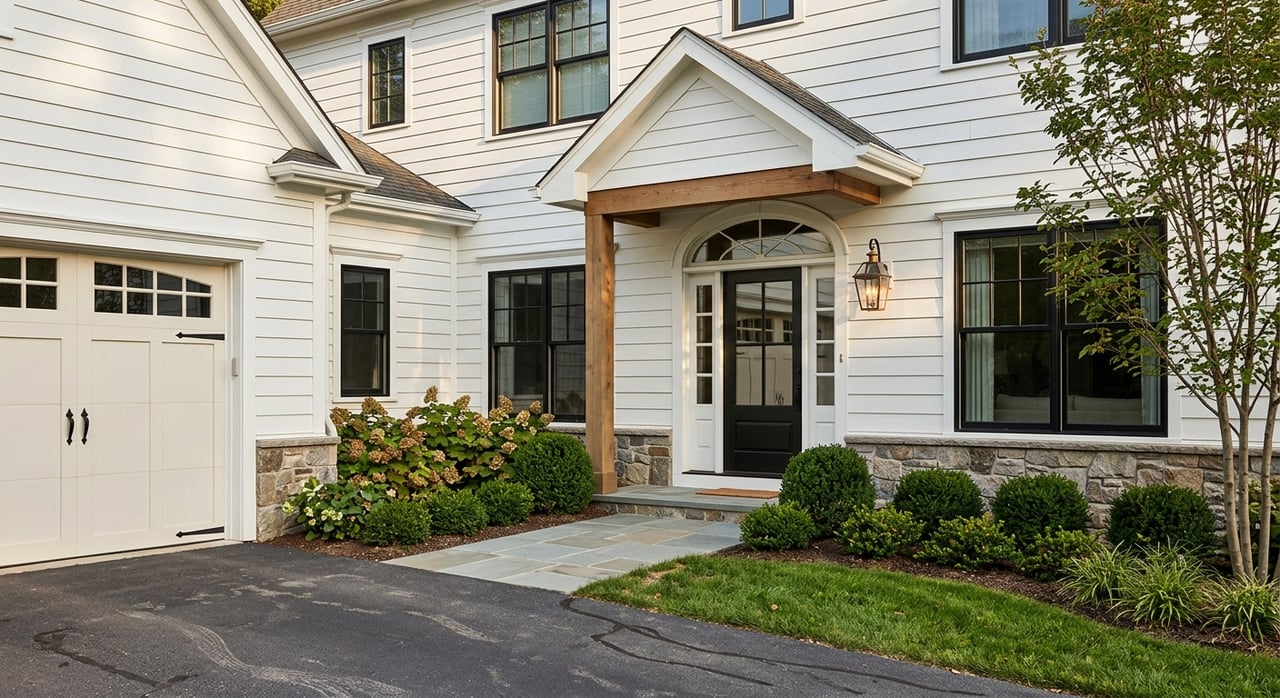
Small-Scale New Construction And Development Opportunities In Newtown
If you are looking at small-scale new construction in Newtown Square, the biggest challenge is usually not demand. It is feasibility. In a stable, high-value market with limited open land, the projects that work tend to be the ones that fit the lot, fit the code, and fit the surrounding streetscape from day one. That is exactly where careful planning can save you time, money, and frustration. Let’s dive in.
Newtown Township offers a strong base for small-scale development because the local market is both established and relatively stable. Census QuickFacts reports 15,494 residents in 2024 across 10.02 square miles, with a 77.8% owner-occupied rate and 89.9% of residents living in the same house one year ago.
That kind of stability matters if you are evaluating a custom build, a teardown-and-rebuild, or a carefully planned infill opportunity. It suggests you are entering a market where many buyers are making long-term housing decisions rather than chasing short-term trends.
Pricing data also supports the idea that Newtown Square is a premium market, even if different sources measure value differently. Census reports a median owner-occupied home value of $579,400, while market snapshots in the research place local values higher, with Zillow at $750,209 and Realtor.com at a $930,000 median listing or home price. The smart takeaway is to treat those numbers as a range, not one exact target.
Newtown Square is not a wide-open land market. It looks much more like a built-out suburban environment where new opportunities often come from infill lots, lot reconfiguration, edge sites, and redevelopment rather than untouched acreage.
That local pattern is reinforced by county and township planning. Delaware County 2035 identifies the Newtown Square area near the PA 3 and PA 252 intersection as a future Town Center, with nearby stretches of those roads considered Activity Corridors. The township’s planning framework also points toward infill development, revitalization, residential uses in commercial areas, and better transit connections.
For you, that means the best small-scale opportunities may not be deep inside established residential blocks. In many cases, they are more likely to be transition sites, underused parcels along corridors, or properties where redevelopment aligns with the township’s broader planning direction.
Before you fall in love with a site, you need to know what Newtown Township zoning actually allows. This is where many small projects either become viable or become expensive lessons.
According to the Newtown Township zoning code, the residential districts most relevant to infill still require fairly large lots:
Those standards are important because they limit straightforward by-right infill. In practical terms, many small-scale opportunities depend on one of a few paths:
This is one reason local development advice matters so much in Newtown Square. A site can look promising on a map and still fail once frontage, setbacks, access, or buffering requirements are applied.
Some buyers hear about cluster development and assume it creates flexibility for smaller residential projects. In Newtown, that is usually not the case.
The township’s Cluster Development Community Overlay District applies only to parcels in R-1, R-1A, R-2, and R-3 with at least 25 acres. It can allow detached homes, semidetached homes, and townhouses, but it also requires at least 50% open space, 100-foot perimeter buffers, sidewalks, and public water and generally public sewer. For most one-off custom builds or small infill deals, that overlay is simply not the relevant tool.
If you are evaluating a modest project, it is better to focus on the base zoning, lot dimensions, utility access, and the approval path tied to the exact parcel in front of you.
In some markets, feasibility is mostly about numbers. In Newtown Square, design fit is part of feasibility too.
The zoning code includes residential design standards that emphasize a village character in certain settings. It addresses how homes relate to the curbline, where garages are placed in some cluster settings, and how roof pitch and massing should be handled. That means exterior design is not just a branding choice after approvals. It is part of how a project fits local expectations from the start.
That also matches the local buyer profile. Census data points to a relatively affluent and highly owner-occupied community, with a mix of households that includes both those under 18 and adults age 65 and over. For a custom or semi-custom project, the strongest positioning is often quality-forward rather than oversized, with efficient layouts, durable finishes, and an exterior that feels consistent with nearby homes.
Not every small lot in Newtown Square carries the same level of development risk. In many cases, corridor and transition locations can offer more flexibility than interior neighborhood sites.
That is partly because the township and county planning framework already points toward growth and revitalization around major road corridors. It is also because the zoning code requires a 50-foot special or primary buffer where nonresidential uses touch residential districts, which makes edge conditions especially important to evaluate carefully.
At the same time, road access is not a small issue. A DVRPC access-management study referenced through county planning highlights congestion and traffic safety issues around PA 3 and PA 252 near Newtown Square. If your site depends on a tricky driveway, turning movement, or heavier corridor exposure, those factors need to be studied early.
Even a modest project in Newtown Square can involve several layers of review. The township separates planning and land development, zoning, and permit forms, and the Planning Commission reviews proposed subdivision and land development plans, zoning ordinances, and commercial developments on a monthly schedule.
For permit timing, the township’s current permit process says residential reviews take 15 business days and nonresidential reviews take 30 business days. Applications must be complete, submitted in hard copy, and include plans plus contractor insurance and HIC documentation where required. Electronic and faxed submissions are not accepted.
That may sound procedural, but it can affect your timeline in a very real way. If you are trying to line up construction, financing, or a resale plan, incomplete paperwork or wrong sequencing can cost more than the review fee itself.
In Newtown Square, utility diligence should happen before design decisions get too far. The Department of Building, Planning & Code Enforcement handles zoning review, plans review, and land development review, and the township also maintains information related to sewer extension planning.
That is especially relevant because certain development formats require public water and generally public sewer unless waived. Even where that exact rule does not apply to your project type, sewer availability can still shape cost, timing, and whether a site pencils out at all.
A simple early question can save you from a complicated late-stage problem: what utilities are available now, and what would it take to serve the project properly?
Small-scale development in Newtown Square usually goes sideways for predictable reasons. The good news is that most of them can be avoided.
Here are the mistakes we see most often based on the township rules and planning context:
The township is clear that many projects require permits, including additions, sheds, pools, grading, demolition, roofing, plumbing, electrical, HVAC work, and more. Its permit guidance also warns that starting work without proper approvals can stop a job.
If you are considering a teardown, infill build, or small redevelopment play, a disciplined screening process can help you move faster with fewer surprises.
Start with this checklist:
That last point matters more than many people expect. Newtown Square buyers are often looking for quality, comfort, and long-term livability. A well-designed home that respects the lot and surrounding character can be easier to position than a project that tries to force square footage where it does not belong.
In a market like Newtown Square, the upside is real, but the margin for error is smaller than it looks. You are not just buying dirt and drawing plans. You are working inside a built-out township with specific lot standards, active planning priorities, design expectations, and procedural steps that can shape the outcome.
That is why local, hands-on guidance matters. The strongest results usually come from aligning site selection, zoning review, design strategy, construction planning, and eventual market positioning from the beginning rather than treating them as separate decisions.
If you are exploring a lot, teardown, or small development opportunity in Newtown Square, Collin Whelan can help you assess the property through both a market and construction lens so you can move forward with more clarity and less guesswork.


Contact us today to schedule a consultation and experience the personalized service and expertise that make The Collin + Colleen Whelan Team.
216 E Lancaster Ave Wayne PA 19087